Mastering the Honfleur Embroidery Font: A Guide to Precision and Elegance
The Honfleur Embroidery Font is more than just a design tool—it's a gateway to creating professional-grade embroidery with ease. Whether you're personalizing garments, crafting accessories, or enhancing home decor, this font offers a blend of timeless elegance and technical precision that sets it apart from other embroidery options. Its clean lines and graceful curves make it ideal for both subtle details and bold statements.
Why Choose the Honfleur Embroidery Font?
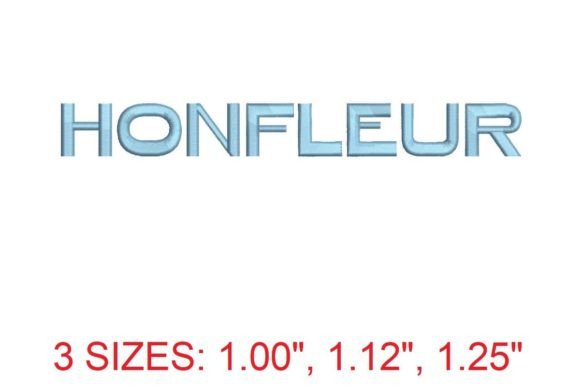
The Honfleur font is designed with embroidery in mind. It features carefully crafted letterforms that ensure impeccable stitch quality, even when scaled down or up. This makes it perfect for those who want to maintain a high standard of detail without sacrificing speed or efficiency.
One of the key advantages of the Honfleur Font is its versatility. It works seamlessly across a wide range of projects, from monogrammed towels and custom T-shirts to embroidered wall art and decorative pillows. Its adaptability means that whether you're a hobbyist or a professional, you'll find something that suits your needs.
Common Misconceptions About the Honfleur Font
Despite its popularity, many users approach the Honfleur Font with misconceptions that can lead to suboptimal results. One common mistake is assuming that all letters will behave the same way across different sizes. In reality, the sizes and stitches provided for "A" and "a" are just a starting point. The full set includes 156 letters and punctuation marks, each with its own unique dimensions and stitch patterns.
Another misunderstanding is the belief that the font is one-size-fits-all. While the Honfleur Font is highly adaptable, it’s important to understand how each letter interacts with your embroidery machine. Some letters may require additional spacing or adjustments to prevent overlapping stitches or uneven density.
Mistakes That Can Impact Your Results
Using the Honfleur Font without proper preparation can lead to frustrating outcomes. For example, not checking the stitch count before loading the design onto your machine can result in incomplete or distorted embroidery. Similarly, ignoring the recommended embroidery file formats can cause compatibility issues, leading to wasted time and materials.
Another pitfall is overlooking the importance of test runs. Even with high-quality fonts like Honfleur, it’s crucial to perform a trial run on scrap fabric before committing to a final project. This allows you to identify any potential issues such as thread tension, stitch density, or alignment problems.
How to Avoid These Mistakes
- Review the More Sewing Info PDF: Before purchasing, download the detailed dimension guide to understand how each character performs at different sizes.
- Test with Scrap Fabric: Always test your embroidery on an unused piece of fabric to ensure everything looks as expected.
- Use Recommended File Formats: Ensure you’re using the correct file types (such as .dst, .pes, or .exp) for your specific embroidery machine model.
- Adjust Settings as Needed: Don’t be afraid to tweak your machine settings based on the test run results.
What to Check Before Using the Honfleur Font
Before diving into your next project, take a moment to review the following:
- Machine Compatibility: Confirm that your embroidery machine supports the file formats included with the Honfleur Font.
- Embroidery Software: Make sure your software is updated and compatible with the latest versions of the font files.
- Thread Type: Use the appropriate thread type for your design—thicker threads may require adjustments in stitch density.
- Fabric Type: Different fabrics react differently to embroidery. Always consider the material you're working with when selecting your design.
By taking these steps, you’ll be well on your way to achieving professional-looking results with the Honfleur Font.
Conclusion
The Honfleur Embroidery Font is a powerful tool for anyone looking to elevate their embroidery game. With its attention to detail and user-friendly design, it’s a must-have for creators of all levels. However, success with this font depends on understanding its nuances and avoiding common pitfalls. By following best practices and staying informed, you can unlock its full potential and create stunning, professional embroidery that stands out.